For dairy farms working to improve productivity and reduce their climate impact, accurate, farm-specific emissions data is an essential starting point.
Enteric methane typically accounts for a large proportion of livestock emissions. However, measuring it, particularly in real-world farm conditions, has historically been difficult. Existing approaches often require expensive equipment and long animal adaptation periods and trial protocols.
Farm Zero C wanted to explore whether ZELP Sense could provide a practical measurement alternative.
The project is a collaboration between Carbery, BiOrbic and other partners, based at Shinagh Estates dairy farm in West Cork, Ireland. Its objective is to create a productive and profitable climate-neutral commercial dairy farm that can serve as a model for others.
The Farm Zero C team is taking a holistic approach and is exploring a number of technologies and practices to reduce emissions, while improving the farm’s productivity and resilience. They’re exploring areas such as fertiliser reduction, improved biodiversity, and better feed and slurry management. Their aim is to test and validate strategies at Shinagh that can then be rolled out across Carbery’s wider supplier base.
“Our objective at Farm Zero C is to create a climate-neutral system on a commercial dairy farm,” explains Padraig Walsh, Project Manager for Farm Zero C at Carbery. “We’re aiming to reduce emissions while maintaining profitability.”
Moving from national estimates to on-farm measurements
As part of the project, the Farm Zero C team calculates the farm’s carbon footprint through a life-cycle assessment. This requires a large amount of data about the farm and its operations.
For enteric methane, the team have so far been relying on Ireland’s national inventory figures. These provide a standardised basis for emissions accounting, but do not capture any variation between individual farms, herds and production systems.
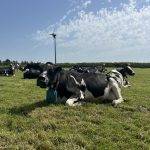
This is particularly relevant at Shinagh Estates. Like many Irish dairy farms, it operates a predominantly pasture-based system, with cows grazing for up to 300 days a year. The team wanted to understand how closely the national figures reflected emissions from animals on their own farm and whether ZELP Sense could be a practical way of getting that farm-specific data.
Farm Zero C has a small team based on the farm. Padraig works on the project with a part-time research assistant, Mary-Kate Doherty. They work alongside the Shinagh team, farm manager Kevin Ahern and herd manager Chloe McCarthy. Any measurement approach needed to fit into their busy working farm, without demanding extensive additional labour or infrastructure.
“Other [methane-measurement] technologies are available”, explained Padraig, “but they aren’t really practical for a commercial farm like Shinagh. ZELP Sense gave us a cheaper, more practical way to measure methane directly, without requiring a huge amount of labour.”
Designed for real-world farm conditions
Before the trial began, the Farm Zero C team spoke with ZELP about what to expect and fitted a non-working device to familiarise themselves—and the animals—with the process.
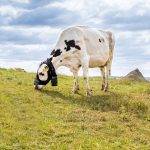
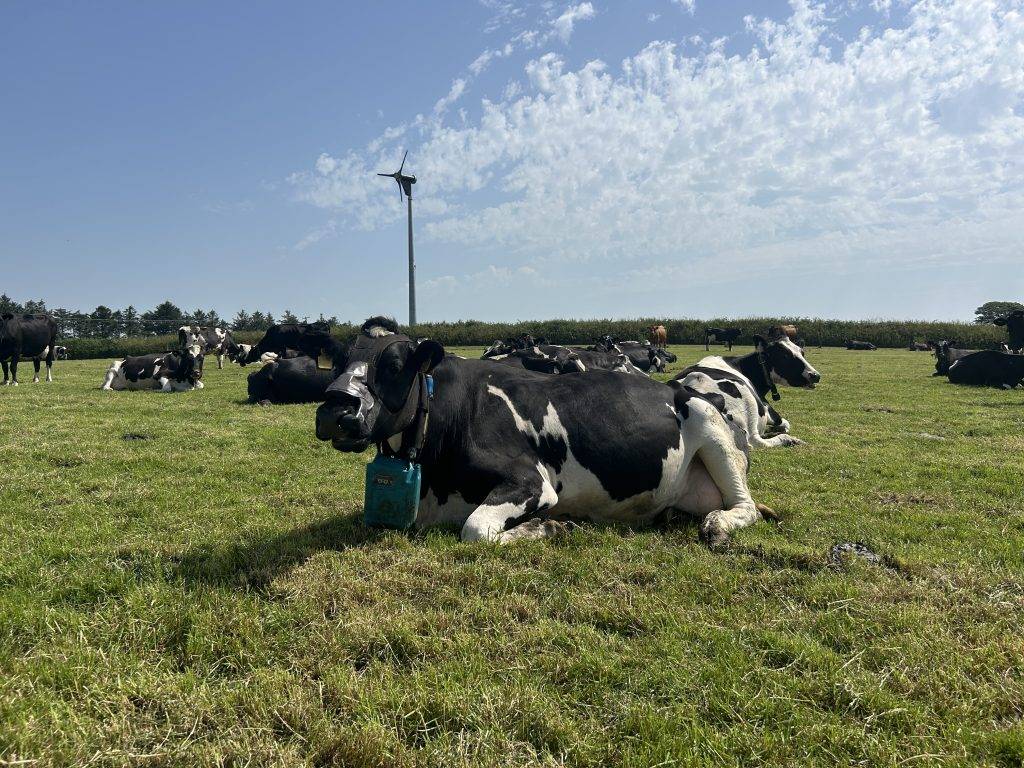
With the farm manager onboard, the team fitted ZELP Sense devices to six cows. They observed some head movement for the first few minutes after fitting, after which the animals settled. The team checked the cows and devices daily throughout the trial and found there were no issues with the devices and no interference with the cow’s normal behaviour.
“We were very happy with how the devices were fitted, and how comfortable the cows were”, said Padraig.
Turning measurements into accessible data
The Farm Zero C team also used ZELP Insight, the digital platform through which users can access and review ZELP Sense data.
After the devices had reconnected to WiFi, the data was quickly processed and delivered to the team. The results were in line with the ranges the team expected, providing a useful indication that the data reflected the on-farm conditions and the natural variation between individual cows. “It was great to get the data back so quickly”, remarked Padraig, “I think the app is brilliant compared with what else is out there.”
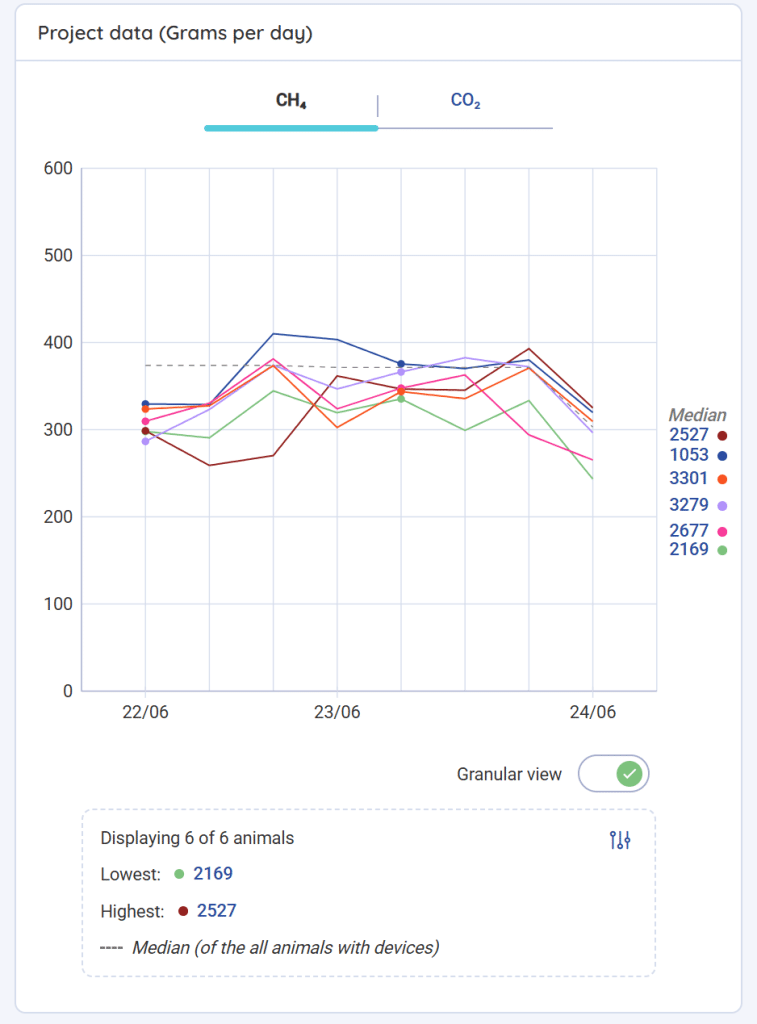
Padraig also provided feedback on ways the platform could develop, including making individual data points and comparisons between groups easier to examine. Feedback like this is helping ZELP continue to improve ZELP Insight.
Measuring the impact of methane-reduction strategies
For Farm Zero C, having a practical way to measure methane under commercial conditions offers potential beyond establishing a baseline.
As mitigation solutions for pasture-based systems are developed, the team may look to implement them at Shinagh. ZELP Sense could then help measure the effects of those interventions under the farm’s operating conditions.
“I could see us using the devices to measure the impact of future interventions on the farm”, said Padraig.
There are other potential applications too. Ireland’s Economic Breeding Index (EBI) helps farmers identify the most profitable and sustainable bulls and cows for breeding herd replacements. As Padraig explains, “ZELP Sense could support the collection of data from larger numbers of animals and help the industry factor emissions into breeding decisions and potentially into Ireland’s Economic Breeding Index.”
A practical route to better methane data
For the team at Farm Zero C, the combination of practicality, competitive pricing and rapid access to emissions data makes ZELP Sense a useful tool in commercial settings.
“Overall, we were very happy with ZELP Sense, and economically it comes in at a very competitive price. I’d highly recommend it”, concluded Padraig.